Huatai Securi2026-10-03 06:55:06Huatai Securities sees no back-to-back Fed hike in October, with December as the base caseHuatai Securities said the weaker-than-expected U.S. nonfarm payrolls report for September has reduced the urgency for the Federal Reserve to deliver another rate hike in the near term. The firm noted that monthly payroll figures can be volatile, and that the three-month average for payroll additions stood at 51,000, close to the level consistent with balanced employment. With the unemployment rate still low, the labor market remains relatively solid, though not especially tight. Huatai also said softer payroll growth and slower wage gains point to weaker real income growth in September, which could make it difficult for consumer spending to repeat August’s strong performance. Looking ahead, the NFIB hiring intentions indicator suggests October payrolls may still come in soft before rebounding later. Based on that view, Huatai Securities said the Fed is unlikely to raise rates again in October, while a further hike in December remains its base-case scenario. The note was cited by Jin10, according to Odaily.70
US payrolls2026-10-02 08:30:52U.S. September payrolls preview points to slower hiring as October rate hike odds fallThe United States is set to release its September nonfarm payrolls report at 20:30 Beijing time on Friday, with a Reuters survey pointing to a gain of 90,000 jobs. That would mark a clear slowdown from August’s 162,000 increase, while the unemployment rate is expected to hold at 4.1% for a third straight month. After the Federal Reserve delivered its first rate hike in three years in September, the report is being watched as a key test of whether the labor market is still showing resilience and whether another hike in October remains necessary. Markets are not focused only on the headline payroll number. Economists are also watching whether wage growth picks up again and whether August’s stronger-than-expected payroll gain could be revised lower, with some arguing that seasonal adjustment factors may have affected the prior reading. At the same time, market pricing for another Fed hike at the Oct. 27-28 meeting has dropped sharply to about 28% as of Thursday, down from nearly 69% a week earlier.60
Bitcoin2026-09-29 16:12:00Bitcoin Rally Cools as Macro Uncertainty Weighs on Risk AssetsBitcoin’s recent rally has started to lose momentum as fresh macro uncertainty adds pressure to risk assets. According to an Odaily report citing Lianhe Zaobao, U.S. President Donald Trump rejected Iran’s latest proposal to reopen the Strait of Hormuz, a development that has added a new layer of uncertainty to the broader market. At the same time, traders are still digesting the Federal Reserve’s rate hike and are preparing for the possibility of another increase in October. After several weeks of gains, Bitcoin’s advance has slowed, even as the asset remains up 28% since Aug. 19. Despite the moderation in price momentum, Bitcoin is still on track for what could be its best quarterly performance since the fourth quarter of 2024.180
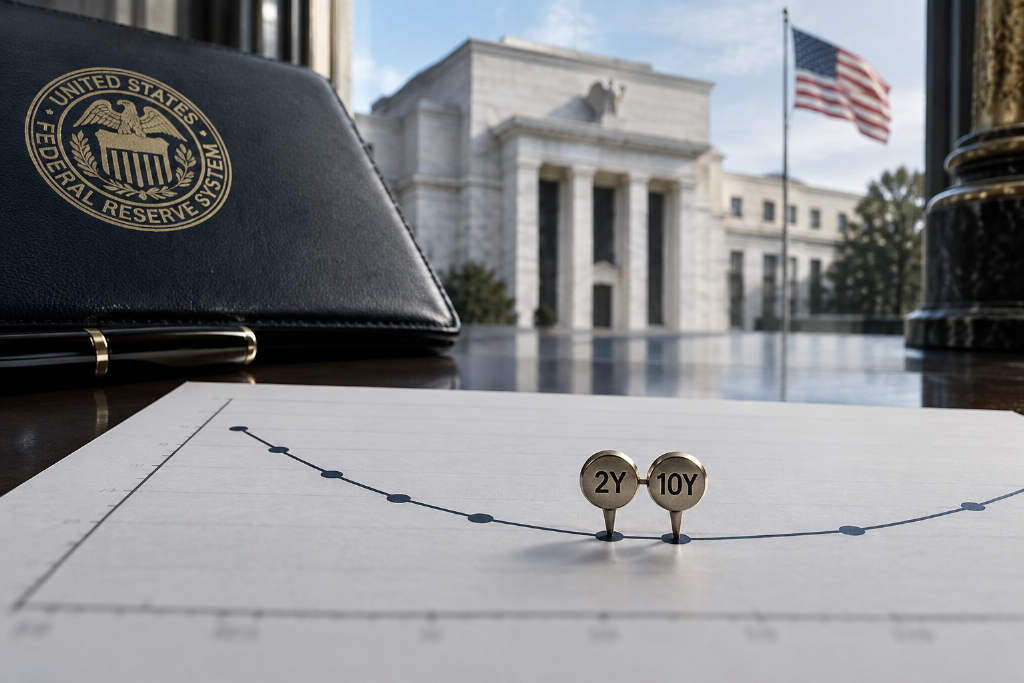
Federal Reser2026-09-28 19:00:09Treasury Curve Nears Inversion After Fed Hike, Leaving Markets Split on Recession SignalThe U.S. Treasury curve moved closer to inversion after the Federal Reserve raised its target range for the federal funds rate by 25 basis points to 3.75%-4.00% on Sept. 16, a unanimous 12-0 decision and the first rate increase in three years. In the week that followed, the spread between 2-year and 10-year Treasuries narrowed to as little as 17 basis points intraday, its tightest level since early 2025, though it did not invert. That move has reopened a familiar macro debate: whether the flattening reflects short-dated yields catching up with the policy path, or whether the bond market is beginning to discount the "strong U.S. economy" narrative. The split in views is sharp. CreditSights’ Zach Griffiths said a flatter curve could force investors to question how strong the economy really is, while TD Securities’ Gennadiy Goldberg argued the market has already priced in substantial tightening and sees limited room for front-end yields to rise much further versus the long end. Other indicators have not lined up behind a recession call. The 3-month/10-year spread was still about 93 basis points on Sept. 25, bank stocks have already corrected by more than 10% from their August highs, and the S&P 500 has yet to show a broader recession pricing shift. For now, the curve is flashing a risk worth pricing, not a confirmed downturn signal.210
Federal Reser2026-09-28 11:03:52Fed Hikes and Record Highs Do Not Tell the Whole Story for U.S. StocksThe Federal Reserve raised its target range for the federal funds rate by 25 basis points to 3.75%-4.00% on Sept. 16, yet the Nasdaq Composite returned to a record high on Sept. 22. That combination appears contradictory at first glance: tighter monetary policy would usually be seen as a headwind for valuations, while fresh highs are often treated as a warning that upside may be limited. But the argument highlighted by Phil Rosen of Opening Bell Daily is that neither signal should be read in isolation. Drawing on historical data compiled by Creative Planning chief market strategist Charlie Bilello, the report says that since 1982, the S&P 500 has posted an average 12-month gain of 14.9% after Fed rate hikes, compared with 11.2% after rate cuts. Separate data cited from FactSet shows that since 1950, buying the S&P 500 at an all-time high led to an average 12-month return of about 9.5%, versus roughly 9.3% on other trading days. Vanguard, using FactSet and Morningstar Direct data through September 2025, found a similar pattern. The article’s main point is not that rate hikes are bullish or that record highs guarantee more gains. It argues that investors need to focus on the economic backdrop behind policy decisions and market strength, especially whether earnings, consumer spending and employment can continue to absorb tighter financial conditions.190
Federal Reser2026-09-28 10:40:09Historical data shows U.S. stocks have posted stronger average returns after Fed hikesA MarsBit report, citing Phil Rosen’s analysis in Opening Bell Daily, argues that neither a Federal Reserve rate hike nor a fresh record high in equities should be read in isolation as a bearish signal for U.S. stocks. The piece points to historical data showing that since 1982, the S&P 500 has delivered a higher average 12-month return after Fed hikes than after rate cuts. It also notes that buying near all-time highs has not historically produced meaningfully weaker forward returns than buying on other trading days. The latest backdrop is unusual on the surface: the Fed raised its target range for the federal funds rate by 25 basis points to 3.75%-4.00% on Sept. 16, and within days the Nasdaq Composite climbed back to a record high on Sept. 22. Reuters linked that rebound to strength in technology shares, renewed enthusiasm around AI trades, and lower oil prices. The article stresses that these statistics do not prove rate hikes are bullish or that the current rally must continue. Its main point is narrower: policy moves and index levels need to be interpreted through the broader economic setting. What matters now is whether corporate earnings, consumer spending, and employment can continue to absorb tighter financial conditions, and whether the lagged effects of higher rates begin to weigh more heavily on demand and profits.230
US inflation2026-09-28 06:13:07Sticky U.S. Core Inflation Keeps Pressure on the FOMCU.S. headline prices may have cooled sharply, but core inflation remained near 3.3% through the summer, keeping pressure on the Federal Reserve’s policy path. Data cited by Techub show that core personal consumption expenditures, or core PCE, has stayed above the Fed’s 2% target for 65 straight months. That persistence is being read as a sign that inflation pressure is broader than energy alone. The report said the Federal Open Market Committee, led by Kevin Warsh, raised interest rates by 25 basis points on Sept. 16. It also cited analysis arguing that entrenched inflation usually requires a longer tightening cycle rather than a one-off move. Macro strategist Jim Bianco said the market may be paying too much attention to oil prices while missing wider inflation across the economy. If inflation continues to force the Fed’s hand, the stock rally built on expectations of easier monetary policy could face a tougher test.180
Federal Reser2026-09-11 15:45:56As a Fed rate hike looks almost certain, traders may focus on what it says about the economyWith a Federal Reserve rate hike seen as nearly certain, traders may be less focused on the move itself and more interested in the message behind higher borrowing costs. The key question, according to CoinDesk, is what elevated rates are signaling about the state of the economy rather than whether the Fed delivers an expected increase. In that setup, market attention may shift from the headline policy decision to the broader economic meaning attached to tighter financial conditions. The report frames the reaction as one driven by interpretation, with traders looking past a widely anticipated hike and weighing the economic signal implied by higher rates.660